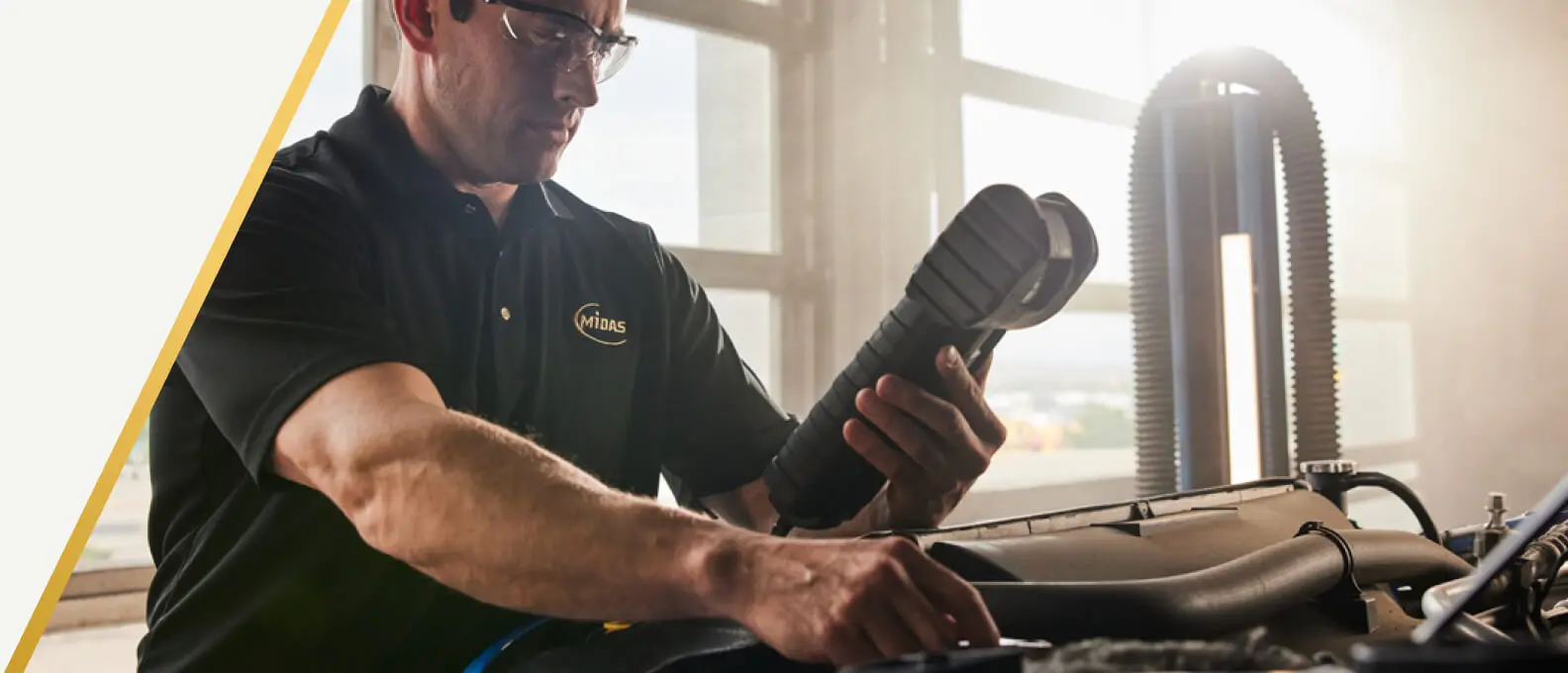
Photo: Midas
-
Reading an Alignment Printout: What the Numbers Actually Mean
Toe, camber, caster and thrust angle explained properly, what to inspect before the car goes on the rack, and how to explain the result without overselling.
-
What Happens After You Apply
The hiring process at ARNAZ, step by step: who reads your application, what the phone call covers, what to look for when you walk the shop, and what week one looks like.
-
Changing Careers Into Auto Repair: An Honest Look at Year One
What transfers from a warehouse or parts counter, what the first ninety days really look like, what the money does before it improves, and who this trade suits.
-
What Auto Repair Actually Pays in Metro Detroit
Real BLS wage figures for Detroit-area technicians, what flat rate and certifications actually do to your paycheck, and the four questions to ask before taking a job.
-
Working on Rust Belt Cars: What Michigan Winters Do to a Repair
Salt, freeze-thaw and seized everything. Penetrant then heat then force, when to cut instead, and why brake lines are the real hazard.
-
22 Shop Tricks Veteran Technicians Use
The small, concrete moves that mostly travel by standing next to someone who has done the job four hundred times.
-
Shop-Provided vs Tech-Owned: Who Should Pay for What
The unwritten convention on tools, the grey zone where the arguments happen, and the questions to ask before you take a job.
-
Scan Tools by Tier: What to Buy at Each Stage of Your Career
Code reader, bidirectional scanner, OE software and a scope. Which tier matches the work you are actually being handed, and the mistake in both directions.
-
Tool Truck Financing: How to Buy Tools Without Digging a Hole
The tool truck is useful and it is also how techs end up with a payment they cannot escape. How to use it without getting buried.
-
Your First Tool Box: What a New Technician Actually Needs
The honest list for year one, why the box comes last, and the rule for deciding which tools deserve real money.
-
Torque, Threads and Fasteners: The Details That Prevent Comebacks
Torque sequence, torque angle, single-use fasteners, thread chasing and broken bolt extraction — the fastener habits that stop good repairs coming back.
-
10 Time-Saving Habits That Separate Fast Technicians From Busy Ones
Speed in the bay is not hurry, it is the absence of rework. Ten practical habits that cut wasted trips, prevent comebacks and raise billed hours.
-
Scan Tool Basics: What Freeze Frame, Fuel Trim and Mode 6 Actually Tell You
Most techs use a fraction of their scan tool. A practical guide to freeze frame, fuel trims, Mode 6, readiness monitors and bidirectional controls.
-
How to Read a Wiring Diagram: A Technician’s Guide
Power, ground, symbols, connector views and voltage drop — a practical guide to reading automotive wiring diagrams and using them to cut diagnostic time.
-
ASE A9 Light Vehicle Diesel Engines: A Study Guide
A9 is not required for Master, but light diesel is in more bays than it used to be. What the test covers, and where high-pressure fuel and emissions content decides it.
-
ASE A7 Heating and Air Conditioning: A Study Guide
Systems and controls are 80 percent of the A7 test and refrigeration components are 20 percent. A section-by-section guide weighted the way ASE actually weights the exam.
-
ASE A3 Manual Drive Train and Axles: A Study Guide
A3 has the flattest question spread in the A-series, and four-wheel drive is the largest section at 20 percent. A section-by-section guide weighted the way ASE weights the exam.
-
ASE A2 Automatic Transmission: A Study Guide That Follows the Test
Diagnosis is 58 percent of the A2 test and unit teardown is 15 percent. You do not need to be a rebuilder to pass. A section-by-section guide weighted the way ASE weights the exam.
-
ASE A1 Engine Repair: A Study Guide That Follows the Test
Diagnosis is 40 percent of the A1 Engine Repair test and the engine block is 9 percent. A section-by-section study guide weighted the way ASE actually weights the exam.
-
ASE A8 Engine Performance: A Study Guide That Follows the Test
Computerized engine controls and general diagnosis are half the A8 test. A section-by-section study guide weighted the way ASE actually weights the exam, plus test-taking tips.
-
ASE G1 Maintenance and Light Repair: A Study Guide That Follows the Test
G1 is the best first ASE certification for most technicians, and it is wide rather than deep. All seven content areas with their real weightings, what depth to study to, and the two G1 rules people miss.
-
ASE A6 Electrical and Electronic Systems: A Study Guide That Follows the Test
The charging system is only 10 percent of the A6 test. General circuit diagnosis and body electrical are nearly half. A section-by-section study guide, weighted the way ASE weights the exam, with tips for the hardest of the everyday A-series tests.
-
ASE A4 Suspension and Steering: A Study Guide That Follows the Test
Alignment theory is 28 percent of the A4 test and it is the part technicians assume they will pick up on the rack. A section-by-section study guide with the angles, the pull directions and test-taking tips.
-
ASE A5 Brakes: A Study Guide That Follows the Test
Hydraulics is 43 percent of the A5 Brakes test and drum brakes are 11 percent. A section-by-section study guide weighted the way ASE actually weights the exam, plus test-taking tips.
-

How to Pass Your ASE Test the First Time: 10 Study Tips
Most techs who fail an ASE test do not fail because they lack shop knowledge. They fail because of how the test is written. Here is what actually moves your score. 1. Answer like the service manual, not like your shop This is the single biggest reason experienced techs fail. You have a fast way…
-

ASE Certification in 2026: What It Costs and How to Register
ASE certification is the clearest way in this trade to prove what you know and get paid for it. It is also more confusing than it needs to be: eight separate tests, four registration windows a year, fees that stack, and a clock that starts the day you pass. Here is what it actually costs…
-
Brake Jobs: The Nine Mistakes That Cause Comebacks
The steps that get skipped when the bay is busy — hardware lubrication, slide pins, hub face cleanliness, bedding-in and torque — and why each one turns into a comeback.
-

Will EVs Kill the Mechanic Trade? An Honest Answer
What actually changes for technicians as EVs arrive, why tires and suspension work increases, the high-voltage safety you cannot improvise, and why hybrids are the bigger near-term story.
-

What Shops Actually Look For When Hiring Technicians
What a shop is really assessing in an interview, what common questions are actually asking, the five questions you should ask back, and what quietly costs people the job.
-
From Lube Tech to Master Tech: The Actual Career Path
The four stages of a technician career, how to get out of each one, why the diagnostic transition is the valuable jump, and the fork between staying technical and moving into management.
-

Flat Rate vs Hourly Pay for Mechanics, Explained
How the two pay structures really differ, who each one suits, why flat rate punishes learning and diagnostics, and the five questions to ask before you accept an offer.
-
How to Become an Auto Mechanic in Michigan With No Experience
Three routes into the trade, the Michigan certification requirement nobody warns you about, what the first year really looks like, and how to get hired with no experience.
-
TPMS: A Technician’s Troubleshooting Guide
Direct vs indirect systems, why service kits prevent most comebacks, relearn procedures, cloning sensors, and the faults that turn out not to be the sensor at all.
-
All-Season vs Winter Tires in Michigan: The Honest Explanation
Why winter tires are a temperature question rather than a snow question, what 3PMSF actually certifies, why AWD does not help you stop, and how to explain the cost honestly.
-
What Every Technician Should Know About Tires
Reading the sidewall and date code, what each wear pattern is telling you, TPMS service, torque and retorque, and how to sell tires without pressure.
-

Project Spark: How Midas Repairs and Gives Away Cars
Midas’s Project Spark repairs donated vehicles and gives them free to families, veterans and first responders facing transportation hardship. Here’s how it works and how to get involved.
-
The Tools Every Mechanic Actually Needs (and What Can Wait)
A realistic tool list for technicians — what you genuinely need on day one, what to add in the first year, what the shop should provide, and the financing trap to avoid.
-
Diagnostic Tips That Save Hours in the Bay
Eleven practical diagnostic habits — from why freeze frame data beats the code number to why voltage drop testing finds faults continuity checks miss.
-
How Much Do Auto Technicians Actually Make in Michigan?
Real BLS wage data for Michigan and Metro Detroit — median, entry level and top-end pay — plus why the gap between the bottom and top of this trade is more than $45,000 a year.
-
Michigan Mechanic Certification: What’s Required, What It Costs, and Why It Pays
Michigan is one of the few states that legally requires mechanics to be certified. Here are the eight auto categories, what testing costs, how ASE fits in, and which certifications to chase first.